
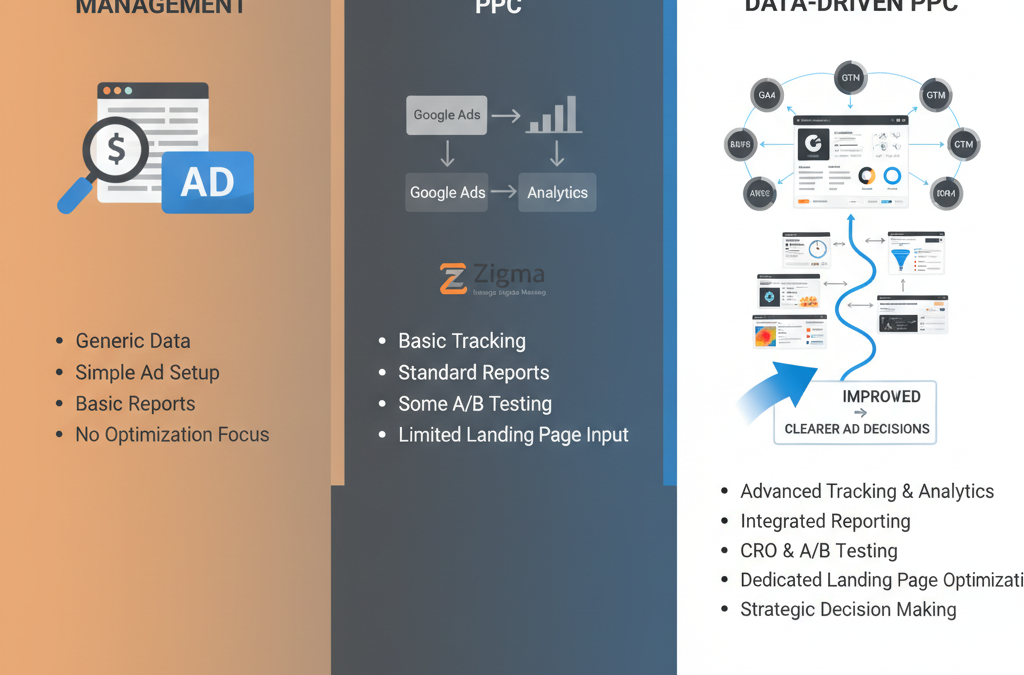
How paid search help should feel before you hire anyone
A search for ppc agency near me usually means you want practical help with paid ads, but you may not know how to judge whether an agency is careful, transparent, or capable of improving lead quality. A PPC agency manages paid search campaigns, builds account structure, researches search terms, writes ads, tests landing pages, and connects ad spend to measurable actions such as calls, forms, purchases, or booked appointments.
The right agency should be able to explain what is happening inside your account without hiding behind jargon. You should understand which campaigns are spending, which searches are triggering ads, which conversions are being counted, and what changes are being made to reduce waste. If those answers are unclear, the problem may not be the ad platform; it may be the management process around it.
For businesses comparing paid search support, it helps to start with the fundamentals: tracking, campaign structure, keyword intent, negative keywords, landing page quality, and reporting. Zigma Internet Marketing’s Google Ads (PPC) service is built around those working parts, not just ad launches.
Quick Facts: PPC Agency Near Me
The short version, in plain terms.
- What: PPC management covers paid search strategy, keyword targeting, ad copy, bidding, landing pages, and conversion tracking.
- Who: A qualified agency should include specialists who understand Google Ads, analytics, search behaviour, and conversion rate optimization.
- Where: Paid search can target specific service areas, product categories, or buyer segments without relying on broad visibility alone.
- How: Strong accounts use query reviews, negative keywords, audience signals, landing page tests, and clean reporting.
- Why: Good PPC management helps reduce wasted spend, improve lead quality, and connect advertising decisions to business outcomes.
What a ppc agency near me actually manages
A PPC agency manages the full system behind paid search ads. That system includes account setup, campaign architecture, keyword research, match types, ad assets, bid strategy, conversion tracking, landing page alignment, budget pacing, and reporting. Each part affects whether your ads attract qualified prospects or spend money on weak searches.
Paid search works because ads appear when people type queries that signal intent. Someone searching for a service, product, repair, consultation, or supplier may be closer to making a decision than someone casually browsing social media. The challenge is that Google Ads can spend quickly if targeting is too broad, conversion tracking is wrong, or landing pages fail to match the searcher’s need.
A strong agency should be able to explain the difference between clicks and business outcomes. Clicks show traffic. Conversions show recorded actions. Qualified leads show whether those actions are useful. Revenue, close rate, and cost per acquisition show whether the campaign supports the business model. Zigma’s broader Digital Marketing Services connect paid search with SEO, website improvements, content, and analytics when the account needs more than ad edits.
How a ppc agency near me should be evaluated
Comparing agencies is less about who sounds confident and more about who can diagnose the account clearly. A useful conversation should include your sales process, average lead quality, tracking setup, landing pages, budget constraints, and the difference between high-volume searches and high-intent searches.
Use the comparison below to separate surface-level management from work that can improve decision-making.
Account review depth
A) Surface review: The agency checks campaigns, budgets, and broad performance totals. This can identify obvious issues, but it may miss the search terms and tracking errors that create wasted spend.
- How it works: The review looks at top-line clicks, impressions, conversions, and spend without a deep query or tracking audit.
- Best fit: This level is useful for a quick first look before a deeper technical review.
- Example: An account may appear healthy because conversions are rising, even though many recorded conversions are low-value form submissions.
B) Search term and conversion review: The agency reviews the actual queries that triggered ads and checks whether conversions reflect real business actions. This reveals gaps that campaign summaries often hide.
- How it works: The review examines search terms, negative keyword gaps, match types, conversion events, and campaign segmentation.
- Best fit: This works well for accounts spending regularly but receiving inconsistent lead quality.
- Example: A campaign may need negative keywords because ads are showing for research searches rather than buying-intent searches.
C) Full funnel review: The agency connects ad activity to landing pages, analytics, CRM feedback, and sales outcomes where data is available. This gives a clearer view of what paid search is actually producing.
- How it works: The review follows the path from query to click, page visit, conversion event, lead qualification, and sales feedback.
- Best fit: This is useful for businesses where lead quality and acquisition efficiency matter more than traffic volume.
- Example: A form conversion may look positive in Google Ads but show weak quality after sales team review.
Reporting quality
A) Platform screenshots: Screenshots show activity, but they rarely explain cause and effect. They can be useful for reference, but they are not enough for decision-making.
- How it works: Reports show spend, clicks, impressions, and conversions directly from the ad platform.
- Best fit: This can help small accounts that only need basic visibility into campaign activity.
- Example: A screenshot may show lower cost per click while hiding a drop in qualified leads.
B) KPI dashboard: A dashboard tracks the metrics that shape campaign decisions. Useful dashboards separate ad activity from business outcomes.
- How it works: The report groups cost per lead, conversion rate, search impression share, click-through rate, and landing page performance.
- Best fit: This suits businesses that need monthly clarity without digging through platform menus.
- Example: A dashboard can show whether a lower cost per lead came from better targeting or from weaker lead qualification.
C) Decision report: A decision report explains what changed, why it changed, and what should happen next. It turns reporting into an operating rhythm.
- How it works: The agency documents tests, findings, risks, next actions, and what each metric says about campaign health.
- Best fit: This helps owners and managers who need practical accountability rather than raw data exports.
- Example: A report may recommend pausing a campaign because lead quality declined after search intent shifted.
Landing page support
A) Ads-only management: The agency manages campaigns but does not improve the page people visit after clicking. This limits how much performance can improve if the page is confusing or slow.
- How it works: Changes focus on bids, keywords, ads, and budgets inside the platform.
- Best fit: This can work when landing pages already load quickly, match the offer, and convert well.
- Example: A service page with clear copy and strong forms may only need campaign tuning.
B) Basic page recommendations: The agency identifies page issues but may not implement the changes. This helps, but execution depends on your internal resources.
- How it works: Recommendations may cover headline match, form length, page speed, trust elements, and mobile layout.
- Best fit: This suits businesses with developers or marketers who can make updates internally.
- Example: A landing page may need a shorter form because mobile visitors are abandoning the page before submission.
C) Campaign and page improvement together: The agency adjusts ads and landing pages as one system. This creates a tighter link between search intent, message, and conversion action.
- How it works: The campaign is tested alongside page copy, calls to action, form placement, speed, and tracking.
- Best fit: This fits accounts where clicks are arriving but calls, forms, or purchases are not keeping pace.
- Example: A campaign may improve after the landing page headline reflects the exact service category promoted in the ad.
Signals that an agency understands paid search
A capable PPC partner should ask careful questions before making recommendations. If an agency only asks for budget and login access, the discovery process may be too thin. Paid search decisions depend on the offer, sales cycle, margin, capacity, geography, conversion value, and what a qualified lead actually looks like.
Listen for questions like these: Which conversions are valuable enough to optimize toward? Which searches waste sales time? Which services or products can you actually fulfil right now? Are calls more valuable than forms? Does your website clearly match the ad promise?
Practical signs of stronger PPC management
- Conversion tracking is verified before scaling spend: The agency checks GA4, Google Tag Manager, call tracking, form tracking, and imported conversions before trusting campaign data.
- Search terms are reviewed regularly: Actual user queries are examined so weak searches can be excluded and useful patterns can guide new ad groups.
- Landing pages are treated as part of PPC: The agency does not blame the platform when the page speed, message match, or form experience is hurting conversion rate.
- Reports explain decisions: A useful report states what changed, what the data suggests, and which next test is being prioritized.
- Budget pacing is tied to demand quality: Spend should follow searches that are more likely to produce qualified enquiries, not only the campaigns with the highest click volume.
What paid search metrics actually tell you
PPC reports can look technical, but the most useful metrics answer simple business questions. Are the right people seeing the ads? Are enough people clicking? Are visitors taking meaningful action? Are those actions turning into revenue or qualified conversations?
Cost per click is only one small part of the picture. A lower cost per click can still waste spend if the queries are weak. A higher cost per click can be acceptable when the visitor has strong buying intent and the landing page converts at a healthy rate. The better comparison is not cheap traffic versus expensive traffic; it is weak intent versus useful intent.
- Click-through rate: This shows whether the ad is relevant enough to earn clicks from the people seeing it.
- Conversion rate: This shows how often visitors complete a tracked action after arriving on the page.
- Cost per lead: This shows how much ad spend is required for each recorded lead, although lead quality still needs human review.
- Search impression share: This shows how often your ads appear compared with the available eligible searches.
- Lead-to-sale feedback: This connects campaign data to sales reality, especially when many leads are unqualified.
Common PPC mistakes that waste budget quietly
Many PPC problems are not dramatic. They build slowly through small account issues: broad match keywords without enough negatives, duplicate conversion events, landing pages that do not match ad copy, weak location settings, or automated bidding fed by poor conversion data.
The most expensive mistake is trusting platform totals without checking what they represent. A campaign can show conversions while counting accidental clicks, duplicate form events, newsletter signups, or calls that are too short to indicate real intent. Before increasing spend, the conversion data should be audited.
Step 1: Audit conversion tracking before judging performance
Check whether every form, phone call, purchase, or booking action is being counted correctly. This step helps prevent false confidence so you can make campaign decisions based on real actions.
Tracking detail: Verify GA4 events, Google Ads conversions, call tracking, and duplicate tags.
Business consequence: Incorrect tracking can make a weak campaign look stronger than it is.
Example: A thank-you page that fires twice may inflate lead volume and push automated bidding toward poor traffic.
Step 2: Review search terms, not only keywords
Keywords are what the advertiser targets, while search terms are what people actually type. This step helps reveal mismatch so you can block irrelevant traffic and strengthen high-intent themes.
Tracking detail: Review queries by campaign, ad group, spend, and conversion action.
Business consequence: Poor search terms can drain budget while still producing clicks.
Example: A service campaign may attract job seekers, DIY searches, or research queries unless negative keywords are added.
Step 3: Match the landing page to the ad promise
The page after the click should continue the same message the searcher saw in the ad. This step helps reduce confusion so visitors can take the intended action faster.
Tracking detail: Compare ad headlines, page headlines, form placement, mobile layout, and page speed.
Business consequence: A mismatch can lower conversion rate even when targeting is accurate.
Example: An ad promoting one service category should not send visitors to a broad homepage that makes them search again.
Step 4: Separate brand, service, and competitor campaigns
Different campaign types behave differently and should not be judged as one pool. This step helps clarify performance so you can see which traffic source is doing the real work.
Tracking detail: Segment reports by campaign intent, query type, and conversion source.
Business consequence: Brand traffic can make the rest of the account appear stronger than it is.
Example: A branded search campaign may convert well because people already know the company, while non-brand campaigns still need improvement.
Step 5: Review lead quality with the sales team
Ad platforms count conversions, but your team knows whether those enquiries were useful. This step helps align campaign optimization with real sales outcomes.
Tracking detail: Compare form details, call notes, lead status, and closed business where available.
Business consequence: Campaigns can optimize toward volume while sales teams deal with poor-fit enquiries.
Example: A campaign with fewer leads may be stronger if those leads are more qualified and easier to convert.
How SEO, PPC, and landing pages work together
Paid search can create immediate visibility, while organic search often builds visibility over a longer period. The two channels should not compete for attention inside a marketing plan. They should share data. PPC query reports can reveal which phrases convert. SEO content can reduce dependence on paid clicks for recurring questions. Landing page tests can improve both paid and organic traffic outcomes.
For some businesses, paid search is the fastest way to test an offer. For others, PPC works better as a focused channel for high-intent service categories while SEO Services support durable search visibility. Website structure also plays a role, especially when ads send visitors to pages that need clearer copy, faster load time, or stronger forms.
Zigma also supports Website Design & Development because PPC performance often depends on what happens after the click. A well-built landing page can improve message clarity, reduce friction, and make tracking easier to interpret.
Questions to ask before choosing a PPC partner
Before signing an agreement, ask questions that reveal how the agency thinks. The strongest answers are usually specific, process-based, and tied to your business constraints.
- How will conversion tracking be checked before campaign changes begin? This reveals whether the agency trusts data blindly or verifies it first.
- How often will search terms and negative keywords be reviewed? This shows whether waste reduction is part of the management routine.
- Which metrics will appear in reports, and what decisions will they support? This separates reporting for visibility from reporting for action.
- How will landing page issues be handled? This clarifies whether the agency can address post-click performance or only edit ads.
- How will lead quality feedback shape campaign changes? This shows whether the agency can connect ad platform data to sales reality.
Trust signals to look for in ppc agency near me searches
Trust in PPC should be based on visible working practices. Look for certification, transparent reporting, clear ownership of tracking, and the ability to explain trade-offs without overpromising. Google Partner-certified expertise is useful because it signals familiarity with platform standards, but certification should still be paired with careful account management and clear communication.
Zigma Internet Marketing supports paid search with practical implementation across tracking, analytics, landing pages, CRO, SEO, and reporting. If you want a second opinion on your account structure, conversion tracking, or paid search strategy, you can reach the team at (647) 556-6071 or info@zigma.ca.
Get clarity before increasing ad spend
A careful PPC review should explain tracking accuracy, search intent, landing page gaps, and the next practical tests.
FAQs About ppc agency near me
A transparent PPC agency explains what changed, why it changed, and how the change affected metrics such as conversions, cost per lead, search terms, and lead quality. Reports should show decision logic, not only screenshots from Google Ads.
Early account issues can often be identified quickly, especially tracking errors and wasted search terms. Judging performance usually requires enough traffic and conversions to see patterns, then comparing those patterns with lead quality and sales feedback.
Landing page support is often valuable because PPC does not end at the click. If the page loads slowly, has unclear copy, or asks for too much information too soon, conversion rate may suffer even when campaign targeting is strong.
Before increasing spend, check conversion tracking, search term quality, negative keywords, campaign segmentation, landing page performance, and lead quality. Scaling a poorly tracked account can increase waste instead of creating better business outcomes.
Yes. PPC can reveal which queries convert, while SEO can build durable visibility for search topics that do not require paid clicks every time. Shared reporting helps both channels focus on the terms and pages that produce useful actions.
Related Topics:
