
Retargeting ads strategies for Toronto ecommerce brands work best when audiences, creative, product feeds, and tracking are built around real buying behaviour rather than broad remarketing lists. A shopper who viewed a winter jacket once should not receive the same message as a cart abandoner who nearly purchased, and a returning customer should not be treated like a first-time visitor.
For ecommerce teams in Toronto, Ontario, the challenge is rarely a lack of traffic. The harder problem is turning paid clicks, organic visits, social engagement, and email traffic into repeat buying moments without exhausting the audience. Good retargeting helps close that gap by matching each visitor’s stage of intent with a relevant message, a sensible time window, and a landing experience that removes friction.
Zigma Internet Marketing helps ecommerce brands connect paid media, analytics, landing pages, SEO, and CRO into one measurable system. If your retargeting is running through Google Ads, Meta, TikTok, YouTube, or programmatic placements, the real question is simple: which visitors deserve another impression, and what should they see next?
Quick Facts: retargeting ads strategies for Toronto ecommerce brands
The short version for ecommerce teams reviewing paid media performance.
- What: Retargeting reconnects with shoppers who viewed products, added items to cart, started checkout, watched videos, or engaged with ads.
- Who: Ecommerce brands, Shopify stores, marketplace sellers, and omnichannel retailers can use retargeting when conversion tracking is reliable.
- Where: Toronto, Ontario brands often need audience segments that reflect downtown delivery zones, GTA shoppers, mobile buyers, and in-store pickup behaviour.
- How: Strong campaigns use clean pixels, GA4 events, Google Tag Manager, product feeds, audience exclusions, creative sequencing, and landing page testing.
- Why: The aim is lower wasted spend, better cart recovery, clearer attribution, and stronger repeat purchase behaviour.
Why Toronto, Ontario ecommerce brands need tighter retargeting rules
Toronto ecommerce is competitive because customers compare quickly. A shopper may browse from a condo near Liberty Village during lunch, check reviews on the TTC ride home, and complete the purchase later from a desktop in North York. Retargeting needs to respect that journey instead of firing the same generic product ad for weeks.
Local conditions also affect messaging. A fashion brand may need seasonal urgency before the first snowfall, while a specialty food retailer may need delivery cut-off messaging before long weekends. Stores with pickup near Queen West, Yorkdale, Scarborough Town Centre, or Markham can use location-aware creative without making the campaign feel intrusive.
Retargeting also sits between paid traffic and site experience. If a product page loads slowly, shipping details are unclear, or checkout creates friction, more impressions will not fix the core issue. That is why ecommerce retargeting often works alongside Website Design & Development, analytics setup, and conversion rate optimization Toronto work.
How retargeting turns buying intent into return visits
Retargeting ads use audience signals from a website, app, product feed, customer list, or ad engagement source. A platform can identify groups such as product viewers, cart abandoners, checkout starters, past purchasers, high-value customers, and visitors who spent meaningful time with category pages.
The mechanism is straightforward: the closer a visitor came to buying, the more specific the next message should be. Someone who viewed one product may need social proof or a category reminder. Someone who abandoned checkout may need reassurance about shipping, returns, sizing, payment security, or pickup availability.
Retargeting also needs exclusions. A customer who already bought a product should not keep seeing the same product ad unless the campaign is built for replenishment, accessories, or cross-sell. Without exclusions, ecommerce brands often pay to reach people who have already converted or who are unlikely to return.
For brands already using Google Ads Management, remarketing lists, Performance Max audience signals, YouTube viewers, and Shopping feed data can all shape better retargeting. The same principle applies across Meta Ads and other paid social channels: the audience logic must match the customer journey.
Audience segments that deserve separate campaigns
Many underperforming ecommerce campaigns fail because they combine different levels of intent into one remarketing pool. A 30-second blog reader, a product viewer, and a checkout abandoner should not share the same budget, creative, or bidding logic.
Useful retargeting segmentation usually starts with behaviour and recency. Recency means how recently someone engaged. Behaviour means the specific action that showed intent. Together, these signals help determine whether a shopper should see a reminder, reassurance, product comparison, offer, or post-purchase follow-up.
| Audience segment | Recommended message | Common mistake |
|---|---|---|
| Product viewers | Show product value, reviews, use cases, and related products. | Sending the same discount message too early. |
| Cart abandoners | Address shipping, return policy, delivery speed, and checkout confidence. | Waiting too long before showing a cart recovery ad. |
| Checkout starters | Use urgency tied to stock, delivery cut-offs, or purchase reassurance. | Showing broad brand ads instead of purchase-specific reminders. |
| Past purchasers | Promote refills, accessories, loyalty, bundles, or new arrivals. | Retargeting with the exact product they already bought. |
| High-value customers | Use early access, premium bundles, or category-specific recommendations. | Treating repeat buyers like cold traffic. |
Retargeting ads strategies for Toronto ecommerce brands that reduce waste
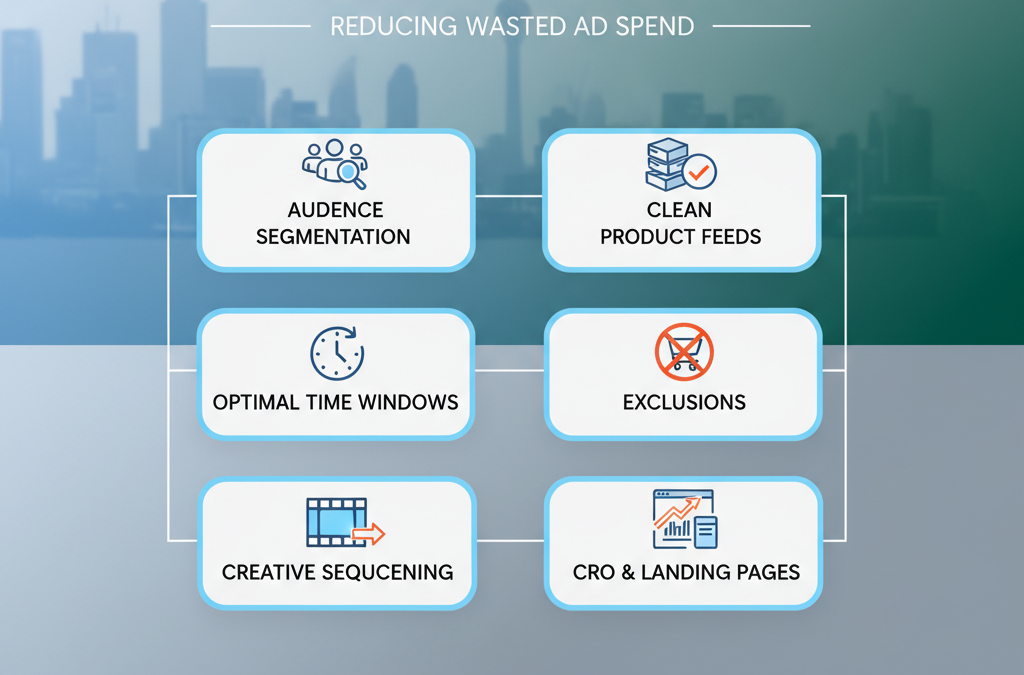
Strategy 1: Split audiences by buying intent
Start by separating visitors based on what they actually did. A product viewer, cart abandoner, checkout starter, email subscriber, and past purchaser each needs a different message. This step helps reduce mismatched impressions so you can spend more budget on visitors who are closer to buying.
Signal to watch: Add-to-cart rate, checkout start rate, purchase rate, and repeat purchase behaviour should be reviewed separately.
Practical setup: Build audience groups in GA4, Google Ads, Meta Ads, and customer relationship tools using consistent event names.
Example: A Toronto apparel store could run a 3-day cart abandoner sequence with sizing reassurance, then move non-buyers into a 14-day category reminder campaign.
Strategy 2: Match time windows to purchase cycles
Short purchase cycles need faster retargeting, while considered purchases need longer nurturing. A low-ticket accessory might need a 1–7 day window, while furniture, jewellery, specialty equipment, or higher-value gifts may need 14–30 days of structured messaging. This step helps align ad timing with decision speed so you can avoid showing late ads after the buying moment has passed.
Signal to watch: Time lag reports can show how many days pass between first visit and purchase.
Practical setup: Create recency groups such as 1–3 days, 4–10 days, and 11–30 days instead of using one broad list.
Example: A premium home goods store may use product reminders during the first week, then shift into room inspiration, reviews, and financing reassurance after the first visit window ends.
Strategy 3: Use creative sequencing instead of ad repetition
Creative sequencing means showing a planned order of messages rather than repeating the same product image. The first ad might remind the shopper of the product, the second might show reviews, and the third might answer a shipping or returns concern. This step helps reduce ad fatigue so you can keep attention without annoying returning visitors.
Signal to watch: Frequency, click-through rate, view-through conversions, and negative feedback should be reviewed together.
Practical setup: Rotate ads by audience stage and cap frequency where the platform allows it.
Example: A skincare brand could show an ingredient-focused ad after a product view, a routine bundle ad after a second visit, and a replenishment reminder after purchase.
Strategy 4: Clean up product feeds before scaling spend
Product feeds affect dynamic retargeting performance because ads pull product titles, images, prices, availability, categories, and attributes from feed data. Poor titles, missing variants, weak images, and inaccurate stock status can make retargeting ads look unpolished or irrelevant. This step helps improve product relevance so you can show cleaner Shopping and dynamic ads.
Signal to watch: Feed disapprovals, low impression products, variant mismatches, and product-level conversion rates reveal feed issues.
Practical setup: Review product titles, categories, images, sale status, GTIN fields, and availability before increasing retargeting budgets.
Example: A Shopify store selling footwear should make sure size and colour variants map correctly before dynamic ads send shoppers back to unavailable products.
Strategy 5: Exclude buyers, employees, and low-intent traffic
Exclusions prevent campaigns from paying for weak or irrelevant impressions. Recent purchasers, customer service visitors, job seekers, wholesale applicants, and internal staff can distort performance if those groups remain in retargeting audiences. This step helps improve measurement accuracy so you can judge campaigns by buyer behaviour rather than inflated traffic.
Signal to watch: Audience overlap, repeat impressions after purchase, and traffic from non-shopping pages can reveal wasted reach.
Practical setup: Create purchase exclusions, internal IP filters where appropriate, and page-based exclusions for careers, support, and policy pages.
Example: A food subscription brand should exclude recent subscribers from acquisition retargeting and move them into retention campaigns focused on add-ons or delivery reminders.
Strategy 6: Connect retargeting with CRO and landing pages
Retargeting can bring shoppers back, but the site still has to close the sale. Product pages should answer fit, shipping, pickup, returns, reviews, payment, and delivery questions without forcing shoppers to search. This step helps remove checkout friction so you can turn return visits into purchases more consistently.
Signal to watch: Product page conversion rate, cart abandonment, checkout abandonment, form errors, and mobile speed indicate where the site blocks purchase intent.
Practical setup: Pair retargeting tests with landing page tests, product page audits, Shopify improvements, and clearer checkout messaging.
Example: A Toronto gift brand might retarget Valentine’s Day shoppers with delivery cut-off creative that lands on a page showing shipping zones, pickup timing, and bundle recommendations.
Channel choices: Google, Meta, YouTube, and email audiences
Retargeting is not limited to one ad platform. The strongest channel mix depends on audience size, product type, customer lifetime value, creative assets, and whether the brand sells through Shopify, WooCommerce, a custom storefront, or a marketplace-connected catalogue.
Google Ads can work well for product-based return visits through Shopping, Performance Max signals, Display remarketing, YouTube engagement, and customer match. Meta can be effective for visual products, bundles, new arrivals, and lifestyle creative. Email and SMS audiences can support paid retargeting when consent, list quality, and segmentation are handled properly.
Comparing common retargeting channels
A) Google Ads retargeting: Google is useful when shoppers have strong product intent or have interacted with Shopping results, search campaigns, YouTube videos, or the website.
- How it works: Audiences can be built from website events, YouTube engagement, customer lists, and product feed interactions.
- Best fit: Ecommerce brands with strong search demand, clean product feeds, and reliable purchase tracking.
- Example: A retailer can retarget cart abandoners with dynamic product ads and exclude recent purchasers for 30 days.
B) Meta retargeting: Meta is useful for visual storytelling, social proof, product education, and reminding shoppers about products they viewed on mobile.
- How it works: Audiences can be built from pixel events, catalogue interactions, Instagram engagement, Facebook engagement, and customer lists.
- Best fit: Fashion, beauty, food, home goods, fitness, and lifestyle brands with strong creative assets.
- Example: A skincare brand can retarget product viewers with routine-based carousel ads and reviews.
C) Email and customer list retargeting: Customer list campaigns can reconnect with subscribers, past buyers, VIP customers, and lapsed customers when consent rules and platform policies are followed.
- How it works: Hashed customer lists can be uploaded to ad platforms and segmented by purchase behaviour or lifecycle stage.
- Best fit: Brands with clean customer data, repeat purchase potential, and strong retention offers.
- Example: A coffee brand can retarget customers near expected replenishment timing with a subscription reminder.
Tracking must be fixed before budgets increase
Retargeting performance is only as reliable as the tracking behind it. If GA4 events, Meta Pixel events, Google Ads conversions, consent settings, or product feed IDs are inconsistent, campaign data can mislead decision-making. A campaign may appear profitable while missing refunds, duplicate events, or checkout drop-offs.
Tracking should confirm the difference between page views, product views, add-to-cart actions, checkout starts, purchases, revenue, and repeat orders. The setup often uses Google Tag Manager, GA4 ecommerce events, platform pixels, server-side tracking where appropriate, and clean naming conventions.
A practical audit should ask:
- Are purchase events firing once per order? Duplicate purchase tags can inflate revenue and make retargeting look stronger than it is.
- Do product IDs match across the website, feed, and ad platform? Mismatched IDs can break dynamic product retargeting.
- Are consent and privacy settings respected? Canadian brands should align tracking with their privacy practices and platform policies.
- Can the team compare platform data with ecommerce backend data? Shopify, WooCommerce, and payment reports often reveal gaps that ad dashboards miss.
Zigma’s analytics setup, dashboards, and technical implementation work help ecommerce teams understand whether retargeting is creating incremental sales or only taking credit for buyers who were already returning.
How to judge a PPC agency Toronto brands can trust
A retargeting partner should be able to explain audience logic, tracking quality, creative sequencing, and landing page friction in plain language. If the conversation stays only inside ad platform dashboards, the campaign may miss the site issues that affect conversion.
For brands comparing a digital marketing agency Toronto search result, a ppc agency Toronto listing, or a broader marketing agency GTA partner, the strongest signal is not a polished pitch. It is whether the team can connect spend to measurable ecommerce behaviour: product views, cart actions, checkout starts, purchases, revenue quality, and repeat orders.
Questions to ask before signing
- How will audiences be segmented? The answer should mention intent, recency, exclusions, and purchase lifecycle rather than one broad remarketing list.
- How will tracking be verified? The team should review GA4, Google Tag Manager, pixel events, platform conversions, and backend order data.
- How will creative be refreshed? Retargeting needs planned message rotation, not the same static ad for every visitor.
- How will landing pages be improved? Strong paid media teams should understand product page clarity, mobile speed, checkout flow, and CRO testing.
- How will reporting separate new buyers from returning buyers? Ecommerce growth looks different when acquisition, remarketing, and retention are reported separately.
Where SEO, content, and retargeting support each other
Retargeting becomes stronger when the brand has useful content and clean organic visibility. A shopper who reads a sizing article, a gift guide, a comparison page, or a product care page can be retargeted with a more relevant message than a visitor who only touched the homepage.
This is where SEO and paid media should not be managed in separate silos. SEO Services can build category visibility, content marketing Toronto campaigns can educate shoppers before they buy, and technical seo services can improve crawlability, speed, structured data, and product indexing.
For retailers with physical pickup or local service components, local seo gta campaigns and google business profile optimization may also support ecommerce visibility. A store that ranks for branded, category, and pickup-related searches can build warmer retargeting audiences before paid campaigns ever begin.
What impacts return in modern retargeting campaigns
Return from retargeting depends on the relationship between traffic quality, audience size, creative relevance, product margin, site conversion rate, attribution settings, and repeat purchase behaviour. A campaign aimed at low-margin products may need tighter frequency caps than a campaign aimed at high-retention subscriptions.
Attribution also deserves caution. Retargeting often touches shoppers late in the journey, so platform-reported conversions may include people who were already likely to return. That does not make retargeting useless; it means reporting should separate assisted conversions, new customer revenue, returning customer revenue, and incremental lift where possible.
Practical metrics to review together
- Frequency: If frequency climbs while click-through rate and purchase rate fall, the audience may be tired of the message.
- Recency performance: A 1–3 day audience may behave very differently from a 14–30 day audience.
- Product-level return: Some products attract clicks but rarely convert after retargeting because price, stock, reviews, or delivery details create hesitation.
- Checkout abandonment: Strong retargeting cannot overcome a confusing checkout flow for long.
- Customer quality: Repeat purchase rate and average order behaviour can show whether retargeting attracts durable customers or bargain-only buyers.
SEO versus PPC in ecommerce retargeting plans
SEO and PPC play different roles in ecommerce growth. SEO builds durable visibility for category pages, product pages, buying guides, and local pickup searches. PPC creates controlled traffic, faster testing, and audience pools that can be used for retargeting.
A strong ecommerce plan uses both channels with clear responsibilities. PPC can test which products, messages, and offers create purchase intent quickly. SEO can turn winning themes into category content, internal links, product copy, and educational assets that keep generating traffic after the ad spend stops.
For a brand searching online marketing Toronto or lead generation agency Toronto support, the decision should not be SEO against PPC. The better question is which channel should answer which stage of the buyer journey, and how should retargeting reconnect those touchpoints without overspending?
How Toronto retailers can compete online without overspending
Toronto retailers compete with national chains, marketplaces, and niche direct-to-consumer brands. Smaller ecommerce teams can still compete by being more precise: cleaner tracking, tighter audiences, better product pages, faster creative testing, and stronger retention flows.
Neighbourhood context can also help. A brand near Leslieville, the Distillery District, Kensington Market, or Yonge and Eglinton may have pickup, delivery, event, or community signals that larger competitors cannot copy easily. Those signals should appear in ads only when they answer a real customer concern, such as delivery timing, pickup convenience, or local availability.
Website design Toronto projects, Shopify improvements, product feed cleanup, and CRO testing can often improve retargeting before budget increases. For many ecommerce brands, the next gain comes from fixing the return path after the click rather than buying more impressions.
Common retargeting mistakes that quietly drain budget
Retargeting waste usually builds slowly. The campaign keeps spending, the dashboard still shows conversions, but the store owner cannot tell whether sales are incremental or simply attributed to late-stage ads.
- Using one audience for every visitor: Broad remarketing pools mix browsers, buyers, cart abandoners, and accidental visitors, which weakens bidding and messaging.
- Ignoring post-purchase exclusions: Showing the same product to a recent buyer wastes impressions and can create a poor customer experience.
- Repeating creative too long: A shopper who sees the same ad repeatedly may become less likely to engage, especially on social feeds.
- Trusting platform attribution without checks: Ad dashboards should be compared with GA4, ecommerce backend data, and customer quality indicators.
- Scaling before the landing page is ready: Product pages with weak photos, unclear shipping, thin descriptions, or slow mobile load times limit return visits.
Build trust before scaling retargeting ads strategies
Zigma Internet Marketing is a Toronto-area digital marketing team based in Markham, supporting ecommerce brands across Toronto, the GTA, Ontario, and Canada. The team brings Google Partner-certified expertise, PPC execution, SEO, Shopify and WordPress support, analytics setup, dashboards, content, and CRO into one working system.
If your retargeting campaigns are active but hard to interpret, Zigma can review tracking, audiences, creative, product feeds, landing pages, and reporting so your next decisions are based on clearer data. You can reach the team at (647) 556-6071 or info@zigma.ca.
Plan retargeting with cleaner tracking and sharper audiences
Talk with Zigma about paid media, analytics, product feeds, landing pages, and conversion testing for your ecommerce store.
FAQs About retargeting ads strategies for Toronto ecommerce brands
Most ecommerce stores should segment by recency rather than use one long audience window. Cart abandoners may need follow-up within 1–3 days, while product viewers may fit a 7–14 day sequence. Toronto, Ontario brands with seasonal products should adjust timing around weather, holidays, and delivery cut-offs.
The strongest platform depends on product type, audience size, creative assets, and tracking quality. Google Ads is often useful for product intent and Shopping feeds, while Meta can perform well for visual products and lifestyle messaging. Many stores benefit from using both with clear audience exclusions.
Yes, but small stores need enough traffic and clean event tracking before retargeting can produce reliable data. A small Shopify store should start with high-intent groups such as cart abandoners, checkout starters, and past purchasers rather than broad site visitors.
Warning signs include high frequency, repeated ads after purchase, weak product-level conversion, unclear attribution, and little separation between new and returning customers. Compare ad platform reports with GA4 and ecommerce backend data before increasing budgets.
Local messaging helps when it answers a buying concern, such as pickup availability, Toronto delivery timing, GTA shipping zones, or event-based product demand. Location mentions should not be decorative. They should make the ad more useful to the shopper.
Related Topics:
