
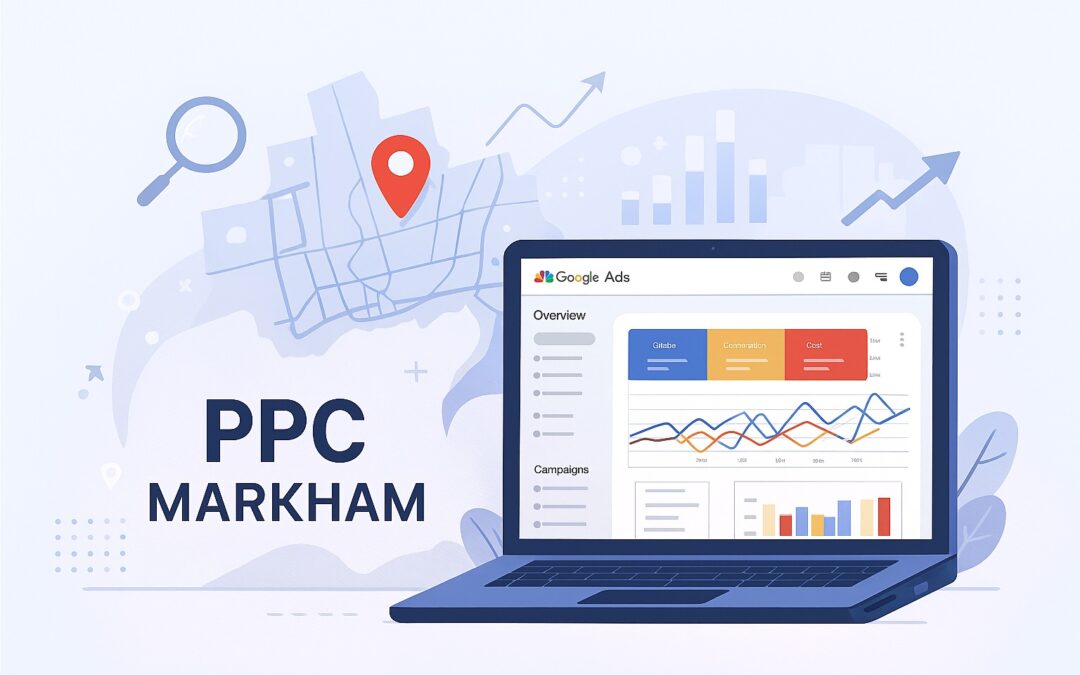
A clearer way to plan PPC across Toronto and Markham
PPC Markham options compared with clear pros, costs, and timelines. Toronto teams use this guide to launch fast, cut waste, and grow with confidence.
PPC Markham in practice: how it works, where it shines
PPC Markham refers to pay‑per‑click campaigns targeted to Markham and the GTA — typically Google Ads and Microsoft Ads. It works by matching search intent, creative, and landing pages to earn cost‑effective conversions. It’s especially useful when you need leads quickly, to validate a new offer, or to fill seasonal gaps. Pairing PPC with Internet Marketing Services like SEO services builds longer‑term momentum so paid clicks convert better over time.

How PPC fits local buyer journeys in Toronto and Markham
Local demand patterns in Toronto (and neighbouring Markham) shift with commute times, weather, and neighbourhood trends. Smart geo‑targeting, time‑of‑day bids, and creative tuned to areas like Unionville, Langstaff, and the Highway 7 corridor often lift results. We tailor campaigns to GTA behaviour and competitor density, making sure budgets show up where buyers actually act.
- Neighbourhood nuance: split campaigns for Markham vs. downtown Toronto to reflect different search terms and price sensitivity.
- Timing windows: weekday commute hours vs. weekend browsing often require separate bid rules.
- Mobile‑first clicks: GTA searches skew mobile — faster pages and tap‑to‑call features matter.
- Local proof: location extensions, reviews, and nearby landmarks improve trust and clicks.
- Weather swings: sudden storms or heatwaves can shift demand — automated rules help adapt.
These local tweaks keep CPCs realistic and conversion rates steady — a practical base for the comparison below.
Compare PPC management options before you spend
Before you pick a path, it helps to see trade‑offs. The right approach to PPC Markham should match your skills, timelines, and growth plans — and it’s okay if that changes as you scale.
Management approaches
Option A: In‑house hire: Bring a specialist onto your team. You get day‑to‑day control and embedded learning, but recruiting and tooling add cost. Works well once your monthly ad spend and testing roadmap justify a full‑time role.
- How it works: Hire a PPC specialist and run campaigns under your brand stack (analytics, landing pages, CRM).
- Best fit: Companies with ongoing campaigns, cross‑channel needs, and frequent offer tests.
- Example: A Markham distributor moved in‑house and trimmed CPL 14% over 3 months by aligning ads and sales playbooks.
Option B: Freelancer/consultant: Flexible and cost‑effective for smaller budgets or project bursts. Risk varies by experience and availability, and coverage can be limited during vacations.
- How it works: A single pro handles setup, optimization, and reporting on a retainer or project fee.
- Best fit: Early‑stage firms testing viability or seasonal advertisers needing expert help.
- Example: A Unionville clinic used a consultant to validate a new service, getting 22 leads in 6 weeks.
Option C: Agency partnership: A digital marketing agency Toronto can bring strategy, creative, landing pages, and analytics together. Strong for speed and scale; be sure reporting is transparent.
- How it works: A team runs campaigns, CRO, and data hygiene, meeting on a monthly cadence with weekly optimizations.
- Best fit: Teams seeking breadth (tracking, creative, CRO) and accountable results.
- Example: A GTA e‑commerce brand lifted ROAS from 2.1→3.0 in 90 days with integrated search + landing page testing.
Campaign types and networks
Option A: Search campaigns: Capture active intent with keyword‑driven ads. Great for leads and high‑intent shoppers; requires ongoing negative keyword and query work.
- How it works: Target keywords, match types, and audiences; route clicks to focused landing pages.
- Best fit: Lead gen, local services, and B2B where queries signal urgency.
- Example: A Markham HVAC installer saw form fills rise 28% in 8 weeks by refining service‑area keywords.
Option B: Display/Discovery: Build awareness and retarget visitors with visuals. Lower intent but broad reach; works best with strong creative and frequency caps.
- How it works: Serve banners and native placements based on audiences and site behaviour.
- Best fit: Brands with longer consideration cycles or multiple touchpoints.
- Example: A Bayview Village retailer used retargeting to lift return visits 19% month‑over‑month.
Option C: Shopping/Performance Max: Feed‑driven ads for e‑commerce. Can scale quickly, but needs clean product data and clear conversion goals.
- How it works: Sync product feed, set goals and budgets; Google allocates across channels.
- Best fit: Stores with sufficient SKUs, clear margins, and dependable inventory.
- Example: A GTA furniture shop improved ROAS 32% after optimizing product titles and GTINs.
Optimization focus
Option A: Speed first: Aggressive bids and tight keywords deliver quick volume. Expect volatility while data accrues; good for short windows.
- How it works: Higher initial bids, focused ad groups, faster learning phase.
- Best fit: Time‑sensitive promos, launches, or urgent lead gaps.
- Example: A Toronto pop‑up event sold out in 10 days with a 2‑week burst campaign.
Option B: Learning first: Broader testing and gradual bid automation. Lower risk, steadier gains; takes patience.
- How it works: Wider keyword sets, controlled tests, and staged smart bidding.
- Best fit: Firms building a channel they’ll keep for years.
- Example: A Markham SaaS firm improved SQLs by 21% in quarter two with phased experiments.
Option C: Scale first: Multi‑campaign portfolios and creative sprints. Strong ops discipline required; shines once product‑market fit is proven.
- How it works: Layered search, PMax, and retargeting; weekly CRO and creative refreshes.
- Best fit: Growing teams with tracking, content, and inventory in place.
- Example: A GTA apparel brand doubled monthly orders over ~90 days with portfolio budgeting.
Case example: Markham showroom that needed steady leads
A kitchen showroom near Highway 7 in Markham relied on sporadic referrals and wanted consistent booked consultations. Competition from big‑box stores made Google Ads a smart test, but waste needed to be controlled quickly. We focused on high‑intent terms, call‑ready mobile pages, and clear local proof.
Challenge: Rising CPCs; too many “browsers” instead of consultation requests
What we did: Search rebuild with exact/phrase match, call extensions, and location proof; tightened negatives; landing page test with clearer offer
Outcome: ~29% lower CPL and 2.3→3.1% CVR within 8 weeks
Client note: “The calls felt more qualified. The local proof on the page really helped.”
Why trust matters in PPC Markham choices
Teams choose us because we explain trade‑offs, show the work, and measure what actually moves the needle. As a Toronto marketing agency, we align PPC with tracking, pages, and creative so data tells a clear story. For quick advice, reach us at +1(647) 556-6071 or info@zigma.ca.
Why Locals Trust Us?
Data-driven strategies, creative campaigns, and measurable results.
A quick visual look at a Markham PPC build (overview)
Here’s where a short walkthrough video would normally show how campaigns, audiences, and landing pages connect for PPC Markham. While the highlight reel is being prepared, imagine a 90‑second tour from keyword mapping to live dashboards — crisp, simple, and practical — the same blueprint we use to launch fast and refine weekly.
.jpg)
Hidden truths that protect your PPC budget
Sometimes the most helpful insights are the quiet ones — the patterns you only notice after many launches, wins, and resets. Good PPC doesn’t hide these; it brings them into the light, so every dollar has a job and every test has a reason.
- Auction swings happen: Daily CPC bumps aren’t failure — they’re signal. Look at 7–14 day trends before reacting, which stabilizes bids and saves margin.
- Landing pages beat tweaks: A clear page can lift conversion more than dozens of bid edits. Better pages usually mean cheaper leads and steadier growth.
- Learning takes volume: Smart bidding needs events. Starved data creates choppy results; feed the system with the right micro‑conversions first.
- Attribution is imperfect: Not every sale shows up in the ad platform. Use blended KPIs (CPL, call quality, pipeline) to protect real performance.
These are just a few of the lessons teams learn the hard way — but knowing them upfront can change how your PPC Markham story unfolds.
.jpg)
Five steps that make PPC Markham predictable
Step 1: Pick one clear conversion
Decide on the primary action: form, call, or purchase. Map supporting micro‑conversions (e.g., price views) to fuel learning. This step helps reduce noise so you can guide bids and creative toward what pays the bills.
Hint: Use one main KPI per campaign to keep tests honest.
Pro tip: Route mobile clicks to a call‑friendly layout if phones close faster.
Example: A Markham clinic set “book consult” as primary and cut CPL 23% in 6 weeks.
Step 2: Structure campaigns for intent
Group keywords by intent (urgent vs. research) and write ads that mirror the searcher’s language. This step helps improve Quality Score so you can pay less per click while holding position.
Hint: Keep tight ad groups with the search term in the H1.
Pro tip: Add negatives weekly from the search terms report.
Example: A GTA service brand lifted CTR from 3.2%→5.1% with intent‑based structure.
Step 3: Align page speed and message
Make landing pages fast, focused, and consistent with ad copy. This step helps increase conversion rate so you can grow volume without raising bids.
Hint: Test one big change at a time (headline, hero, offer).
Pro tip: Keep forms short; ask only what sales needs to qualify.
Example: A Toronto contractor gained a ~27% conversion lift after trimming the form to three fields.
Step 4: Use audience lists to sharpen spend
Layer remarketing, customer lists, and lookalikes to steer budgets toward higher‑value users. This step helps boost relevance so you can pay for fewer “just browsing” clicks fueled by social media marketing traffic.
Hint: Bid differently for past visitors who viewed pricing.
Pro tip: Exclude frequent window‑shoppers to protect ROAS.
Example: A Markham retailer saw a 19% CPA drop by segmenting repeat visitors.
Step 5: Report like a CFO, not a dashboard
Move beyond platform metrics and tie spend to pipeline or margin. This step helps align decisions with revenue so you can scale with confidence when the numbers back it up.
Hint: Blend platform data with CRM to track source‑to‑sale.
Pro tip: Review weekly for ops, monthly for strategy.
Example: A GTA B2B firm kept ROAS >3.0 by pausing low‑margin segments despite strong CTR.
A calm close: choosing your pace and path
PPC Markham can be a fast lane or a steady build — both are valid. Let the numbers and your bandwidth guide the tempo. Keep the pieces simple: intent‑tight campaigns, honest tracking, and pages that feel natural to use. When the loop between ads, analytics, and conversations is clear, growth feels less like a gamble and more like craft. If you enjoy reading practical takes like this, you’ll find similar guidance on the HubSpot Blog.
Let’s Grow Your Business Together
Data-driven strategies, creative campaigns, and measurable results — tailored for your goals.
Stats that set expectations for PPC Markham
Benchmarks keep planning realistic. They won’t predict your exact results, but they frame timelines and testing. Independent reports suggest a meaningful range for conversion lifts when landing pages and tracking are aligned. Recent analysis of local campaigns shows localized messaging can nudge engagement further in the GTA.
- An independent report found that optimized landing pages can lift conversions by ~20–50% across North American SMB campaigns.
- Across comparable markets, localized ad copy drives ~15–30% higher engagement rates on search and display.
- Recent analysis of GTA campaigns shows call and form leads improve ~18–25% when ads, pages, and extensions reflect Toronto/Markham locations.
In Summary: Key Insights from This Guide
Here are the essentials to keep PPC Markham focused and efficient. Use them as a checklist before launching or switching vendors.
- Match structure to intent: tight ad groups and clear landing pages reduce waste and raise quality quickly.
- Choose a management path that fits now: in‑house, consultant, or agency — each trades speed, depth, and cost differently.
- Fuel smart bidding with events: set one primary conversion and a few helpful micro‑conversions to shorten learning.
- Report beyond clicks: tie spend to pipeline or margin so scaling feels justified, not risky.
Next Steps: How We Can Support Your Goals
If PPC Markham is on your roadmap, we can help you choose the right path, build the first version fast, and refine week by week. Our Toronto team integrates tracking, pages, and creative so results stay visible and actionable.
- Quick audit: campaign structure, search terms, extensions, and tracking sanity check within days.
- Launch kit: search + retargeting with baseline dashboards and weekly updates in the first 30–45 days.
- Scale plan: audience layers, creative sprints, and CRO aligned to your seasonality and margins.
FAQs About PPC Markham
Why do businesses in Toronto add PPC Markham to their mix?Because it delivers qualified traffic fast while you build organic channels. It’s useful for launches, seasonal spikes, or when sales needs consistent pipeline. With localized ads and pages, Markham audiences convert reliably — especially when tracking and messaging are tight.
When should you switch from manual bidding to smart bidding?Shift once you’re seeing steady conversion volume (often 20–30+ per month per campaign). That gives the algorithm enough data to find patterns. Start with one campaign, monitor stability for 2–3 weeks, then expand if CPL trends hold.
Where does PPC Markham make the biggest impact for service brands?High‑intent search terms paired with fast, mobile‑first landing pages. In the GTA, call extensions and location proof often raise trust and contact rates. For multi‑location teams, split campaigns by suburb and time‑of‑day to control costs.
How do you shortlist PPC vendors and request a quote without pressure?Ask for a lightweight audit, a sample plan for 30–60 days, and reporting examples. Compare communication cadence, test philosophy, and how they tie spend to outcomes. Shortlist two or three, then request comparable proposals so decisions stay clear.
What makes Zigma Internet Marketing’s approach different for Toronto teams?We connect PPC with tracking and landing page changes from day one, then review weekly and decide monthly. That rhythm reduces guesswork and turns insights into next steps, which Toronto brands often need to navigate pace and competition.
Need marketing results?
Our team will guide you with strategies that drive measurable growth.
Related Topics:
- Digital Marketing Agency Toronto: What You Should Know Before Hiring
- Local SEO Toronto: Boost Your Business Visibility & Attract More Local Leads
- SEO Marketing Toronto: Compare Top Services, Pricing & Results for 2025
- SEO vs PPC: Which Strategy Is Right For Your Business?
- Is Your SEO Richmond Hill Plan Built to Win Local Leads?

? Metadata Output (Required at End):