
A strong digital marketing website does more than look polished. It helps the right people find your business, understand what you do, and take a clear next step. For most companies, that means combining search visibility, persuasive messaging, fast page performance, and reliable tracking so visits can turn into calls, form submissions, and sales.
Many business owners invest in design first and assume results will follow. Sometimes they do, but often the site ends up acting like an online brochure rather than a working sales asset. A better approach is to treat the website as the centre of your marketing system, with SEO, paid traffic, content, conversion paths, and analytics all working together. If you want a broader view of how those pieces connect, review these Digital Marketing Services before deciding where your website needs the most support.
The rest comes down to fit. Does the site reflect how buyers actually search, compare, and decide in your market? Does it support lead generation, e-commerce, or both? Those questions shape everything that follows.
What makes a digital marketing website perform in the real world
A digital marketing website is a business website built to attract qualified traffic and guide visitors toward measurable actions. Those actions can include phone calls, consultation requests, quote forms, purchases, booked demos, or in-store visits. Unlike a purely aesthetic site, it is designed around user intent, search demand, landing-page structure, and conversion tracking.
That distinction matters because traffic alone rarely solves the business problem. A site may rank for search engine optimization terms, bring in social traffic, or support pay per click advertising, but still underperform if page speed is poor, the offer is unclear, or forms create friction. In practice, performance depends on how well technical setup, messaging, design, and analytics work together.
A common misconception is that SEO and design happen in separate lanes. In reality, a site built for visibility and conversion needs both. Navigation affects crawlability. Page templates affect content depth. Mobile layouts influence form completion. Tracking affects campaign decisions. That is why businesses often pair site improvements with SEO Services rather than treating the website as a one-time project.
How a digital marketing website supports growth in Toronto, Ontario
In Toronto, Ontario, a digital marketing website often has to do more work than a site in a less competitive market. Search demand is broad, ad auctions can be expensive, and buyers compare several providers before reaching out. A business website needs to help visitors make sense of the offer quickly while still giving search engines enough depth and structure to understand the page.
That is especially true for companies competing across neighbourhoods and service areas such as Downtown Toronto, North York, Scarborough, Etobicoke, and the wider GTA. A law firm, contractor, clinic, B2B service provider, or e-commerce brand may all need different landing-page architecture, different local search signals, and different content depth even if each business is investing in online marketing Toronto strategies.
For Toronto brands, local relevance usually comes from a few practical elements: pages built around real service intent, Google Business Profile support, fast mobile performance, and messaging that reflects how buyers compare providers. A website design Toronto project that ignores those local decision patterns may look refined and still struggle to produce qualified leads.
Comparing the pieces that shape website performance
Most businesses do not need every tactic at the same intensity. They need the right mix. A digital marketing website in Toronto, Ontario usually performs best when its traffic sources, page structure, and conversion paths match the buyer journey rather than chasing every channel at once.
Traffic acquisition
A) Search engine optimization: SEO focuses on earning visibility in unpaid search results through technical improvements, targeted pages, and content relevance.
- How it works: Pages are structured around service intent, technical SEO removes crawl barriers, and content helps the site rank for qualified searches.
- Best fit: Businesses that want compounding visibility and can invest in steady improvement rather than expecting instant lift.
- Example: A local service brand building out service pages, local SEO GTA signals, and content marketing Toronto support over several months.
B) Google Ads and paid search: Paid search creates immediate visibility for high-intent keywords, but results depend heavily on targeting, tracking, and landing pages.
- How it works: Ads appear for selected searches, visitors land on dedicated pages, and conversion data is used to refine bids and search terms.
- Best fit: Businesses that need faster lead flow, have clear commercial intent, and can support disciplined campaign management.
- Example: A company using google ads management toronto campaigns to drive calls from high-intent searches while SEO builds over time.
C) Social and referral traffic: Social channels can support awareness and remarketing, but they usually work better when the website already has a clear message and strong offer.
- How it works: Visitors arrive from organic social, paid social, email, or partnerships and are moved toward a specific action on-site.
- Best fit: Brands with repeatable creative assets, distinct audience segments, or products that benefit from visual storytelling.
- Example: An e-commerce brand pairing product education with remarketing traffic and stronger landing-page design.
Page strategy
A) Homepage-led structure: Some businesses rely too heavily on the homepage to explain everything.
- How it works: Core information is centralised, with fewer dedicated service or campaign pages.
- Best fit: Smaller businesses with limited services and a narrow target audience.
- Example: A consultant with one core offer and a simple contact path.
B) Service and landing-page structure: This approach separates intent by service, audience, or campaign source.
- How it works: Each page speaks to a specific need, keyword theme, or ad group and uses tailored messaging.
- Best fit: Companies pursuing lead generation agency toronto queries, multiple services, or more than one buying scenario.
- Example: A site with separate pages for SEO, PPC, web design, and conversion services.
C) Content hub structure: Content assets support discovery earlier in the buying cycle and strengthen topical depth.
- How it works: Blog posts, guides, and supporting resources connect to core service pages and build internal relevance.
- Best fit: Businesses competing in education-heavy markets or planning long-term search engine optimization growth.
- Example: A B2B company publishing practical guides that feed visitors into commercial pages over time.
Conversion setup
A) Basic contact capture: The site offers a phone number, a contact form, and little else.
- How it works: Visitors self-navigate and decide whether to reach out.
- Best fit: Established businesses with strong referral traffic or buyers already near a decision.
- Example: A firm where most leads already know the service they need.
B) Guided lead path: Pages use clear calls to action, stronger service framing, trust cues, and lower-friction forms.
- How it works: Visitors are given a more obvious next step based on intent, urgency, or stage of research.
- Best fit: Most local and B2B sites trying to improve conversion rate optimization toronto results.
- Example: A landing page with proof points, FAQs, and a shorter inquiry form.
C) Fully tracked funnel: The site is measured against calls, form quality, revenue, and campaign source data.
- How it works: GA4, tag management, call tracking, CRM feedback, and dashboards connect spend to outcomes.
- Best fit: Companies serious about scaling paid media, technical seo services, and CRO without guessing.
- Example: A multi-channel brand reviewing which landing pages actually generate sales-qualified leads.
How to choose the right digital marketing agency for your website
A capable agency should be able to explain not only what they will build, but why each part of the website supports business goals. That includes page architecture, search intent, conversion paths, content planning, and analytics setup. If an agency talks mostly about aesthetics and not about lead quality, tracking, or landing-page logic, the website may be attractive without being commercially useful.
It also helps to check how broad the execution scope really is. Some agencies are strong at design but weak on technical SEO. Others can run ads but do not improve on-site conversion. For businesses that need connected execution, a team that handles Google Ads Management, SEO, development, and measurement tends to reduce handoff gaps and reporting blind spots.
Two questions are worth asking early. How will success be measured after launch? And what specific changes will happen in the first 60 to 90 days? Clear answers usually signal a process-driven partner.
What to look for in an agency review process
- Channel alignment: The agency should connect SEO, PPC, content, and website design to the same conversion goals rather than treating each service as a silo.
- Tracking discipline: Ask whether they handle ga4 setup, google tag manager, and conversion tracking before campaigns scale.
- Build quality: For WordPress or Shopify projects, ask how the site will support speed, crawlability, content expansion, and form performance.
- Reporting clarity: Good reporting should show lead quality, cost efficiency, and page-level outcomes, not just traffic charts.
What impacts ROI in a modern digital marketing website
Return from a website rarely comes from one change. It usually comes from a chain of improvements: better keyword targeting, faster pages, clearer service positioning, cleaner forms, stronger landing pages, and better attribution. If one link in that chain is weak, the whole system underperforms.
For example, a business may pay for clicks through a ppc agency toronto campaign, yet still struggle because the landing page does not match the search term closely enough. Another business may rank well through an seo company toronto effort, but lose enquiries because its mobile form is too long or its calls to action are vague. The visible issue may be “low leads,” but the root cause often sits deeper in the website experience.
In our work, we often see the strongest gains come from practical fixes rather than dramatic redesigns. Clearer page intent. Better internal linking. Faster mobile templates. Cleaner call tracking. A shorter quote form. Small adjustments, but they compound.
Common ROI drivers on-site
- Intent match: Pages should reflect what the visitor searched for, not just what the business wants to say.
- Conversion friction: Every extra field, weak headline, or confusing navigation choice can reduce enquiry volume.
- Measurement accuracy: Without clean attribution, it becomes difficult to tell whether SEO, ads, or content are producing qualified leads.
- Technical foundation: Slow load times, indexation problems, and template issues can quietly erode results across every channel.
SEO vs PPC inside a digital marketing website strategy
SEO and PPC solve different timing problems. SEO helps a website earn visibility over time for relevant searches, often producing lower acquisition costs once pages mature. PPC creates faster visibility and can test offers, keywords, and landing pages quickly. For many businesses, the most practical question is not which channel wins, but which channel should lead right now.
If the business needs near-term lead volume, paid search may carry more weight first. If the business is building long-term visibility, search engine marketing sem and organic content usually need a stronger foundation. In Toronto, where competition is high in both paid and organic results, combining the two often gives better feedback loops. Paid campaigns reveal converting queries faster, while SEO builds durable coverage around service intent.
A useful comparison is this: PPC is like turning on a tap, while SEO is closer to building a pipeline. The tap can produce traffic quickly, but only while spend continues. The pipeline takes longer to build, yet it often improves resilience over time.
Use SEO when these conditions are true
- Longer buying journeys: Buyers compare several providers before submitting a form or calling.
- Broader service coverage: The business needs visibility across multiple services, locations, or informational searches.
- Content depth helps sales: The audience needs explanations, proof, and comparison before making contact.
Use PPC when these conditions are true
- Speed is important: The business wants leads while organic pages are still maturing.
- Commercial intent is strong: Searchers are already close to a decision.
- Landing pages are ready: The site can support message match, tracking, and lead qualification.
How local businesses in Toronto can compete online with a stronger website
Toronto businesses do not always need the biggest brand presence to compete well online. They need sharper relevance. A smaller company can outperform larger competitors in specific service categories by building better local landing pages, clearer offers, stronger reviews integration, and cleaner conversion paths.
That usually starts with understanding local search behaviour. A business may need service pages aligned with neighbourhood intent, better google business profile optimization, and content that supports both branded and non-branded discovery. For some brands, website development GTA improvements are just as important as campaign setup because technical weaknesses can suppress every traffic source.
It also helps to think beyond rankings. A page that ranks fifth but converts well can produce better business outcomes than a page that ranks second and creates poor-quality enquiries. That is why local SEO, landing-page quality, and analytics should be treated as one operating system rather than separate tasks.
Practical ways Toronto companies can close the gap
- Build by intent, not by menu: Create pages around service demand and buying context instead of forcing all visitors through a generic homepage.
- Tighten local trust signals: Reviews, location clarity, service-area relevance, and contact consistency support both search visibility and conversion confidence.
- Improve post-click experience: For lead generation ads and local search traffic, the landing page often determines whether the click was worth paying for.
- Measure lead quality: A surge in form volume means little if sales teams cannot use the leads or if tracking misses phone calls.
What experienced teams usually notice first
- Traffic problems are often conversion problems in disguise. A business may assume it needs more visits, yet the larger issue is that existing visitors are not getting a clear enough reason to act.
- Design quality and sales clarity are not the same thing. A clean interface helps, but pages still need strong hierarchy, proof, and message match to perform.
- Measurement gaps create expensive decisions. If call tracking, forms, and channel attribution are incomplete, campaign changes can easily go in the wrong direction.
Key steps for building a digital marketing website that converts
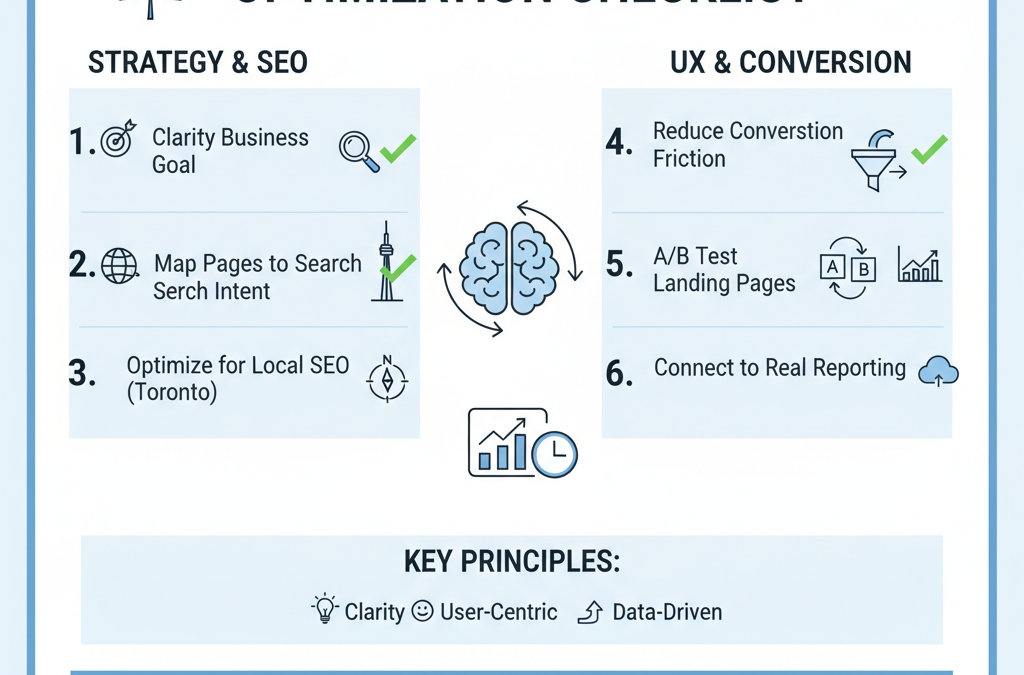
Step 1: Clarify the business goal
Start by deciding what the website must produce: calls, quote requests, booked consultations, online sales, or qualified leads by service type. That sounds basic, but many websites are built without a firm conversion priority. This step helps focus page structure and messaging so you can measure the right outcomes.
Main focus: Define one primary conversion and a small set of supporting actions.
Why it helps: A clear goal reduces mixed messaging and gives campaigns a better destination.
Example: A B2B service firm may treat demo requests as the main action, while a local trade business may prioritise phone calls and short forms.
Step 2: Map pages to search intent
Each important page should match a real type of search. Some users want service details. Others want proof, comparisons, or local reassurance. Grouping all of that into one page usually weakens relevance. This step helps lead generation and organic visibility because page content is tied to how people actually search.
Main focus: Separate service pages, campaign landing pages, and educational content by intent.
Why it helps: Better intent match tends to improve both rankings and conversion quality.
Example: A site may need separate pages for local seo gta, content marketing toronto, and website design toronto instead of one generic services page.
Step 3: Build with technical strength early
Technical problems often stay hidden until growth stalls. Slow templates, indexation issues, broken schema, and poor mobile rendering can quietly limit performance for months. Addressing them early creates a stronger base for search, ads, and content.
Main focus: Prioritise page speed, crawlability, mobile UX, and clean site structure.
Why it helps: A technically stable site is easier to scale through SEO, PPC, and content additions.
Example: A WordPress or Shopify build should support technical seo services from launch rather than treating them as a later repair job.
Step 4: Reduce conversion friction
Visitors should not have to work hard to take action. Long forms, weak call-to-action placement, generic headlines, and cluttered layouts create hesitation. Even modest friction can lower response rates noticeably, especially on mobile. This step helps convert existing traffic more efficiently before you spend more to bring in new visitors.
Main focus: Shorten paths to contact and make the next action obvious.
Why it helps: Better form completion and stronger page clarity often improve lead volume without needing more traffic.
Example: Replacing a long inquiry form with a shorter high-intent form can support conversion rate optimization toronto goals.
Step 5: Connect the site to real reporting
A digital marketing website should show what is working, not just what is visible. That requires analytics setup, event tracking, call measurement, and reporting that ties source traffic to outcomes. Without that layer, teams often optimise for clicks, impressions, or rankings without seeing which pages create sales conversations.
Main focus: Track meaningful actions and review page-level performance regularly.
Why it helps: Reliable reporting supports better budgeting, faster fixes, and smarter channel decisions.
Example: A company investing in online marketing Toronto campaigns can compare organic leads, paid leads, and landing-page conversion quality in one dashboard.
Common questions about a digital marketing website
A digital marketing website is built around measurable actions such as calls, forms, bookings, or sales. It usually has stronger SEO structure, clearer landing pages, and more reliable tracking than a basic brochure-style site.
No. Some businesses in Toronto, Ontario can start with one channel first. The better choice depends on urgency, competition, search demand, and whether the site is ready to convert traffic efficiently once visitors arrive.
Some conversion improvements can appear soon after launch if the site fixes obvious friction. Organic growth through SEO usually takes longer because rankings, authority, and page relevance build gradually over time.
At minimum, track form submissions, phone calls, key button clicks, landing-page performance, and traffic source quality. For more mature setups, CRM feedback and revenue attribution help show which campaigns are producing useful leads.
Sometimes, yes—especially in Toronto, Ontario where sharper intent targeting, better local landing pages, and cleaner conversion paths can outperform bigger competitors with weaker user experience or vague service messaging.
A better website usually starts with clearer decisions
A digital marketing website works best when the business knows what it wants the site to do, which audiences it needs to reach, and how success will be measured after launch. The strongest websites are rarely the ones with the most pages or the flashiest designs. They are the ones that align visibility, user experience, and conversion paths in a way that feels clear to both search engines and real buyers.
If your current site attracts traffic but struggles to turn that attention into enquiries, it may be time to review the strategy behind the build. Zigma Internet Marketing brings together SEO, PPC, web design, content, CRO, and reporting to help businesses create websites that support measurable growth. If tailored advice would help, you can 📩 Ask an SEO/PPC question.
Related Topics:
- search engine optimization
- pay per click advertising
- local search marketing
- conversion optimization
- analytics and tracking setup