


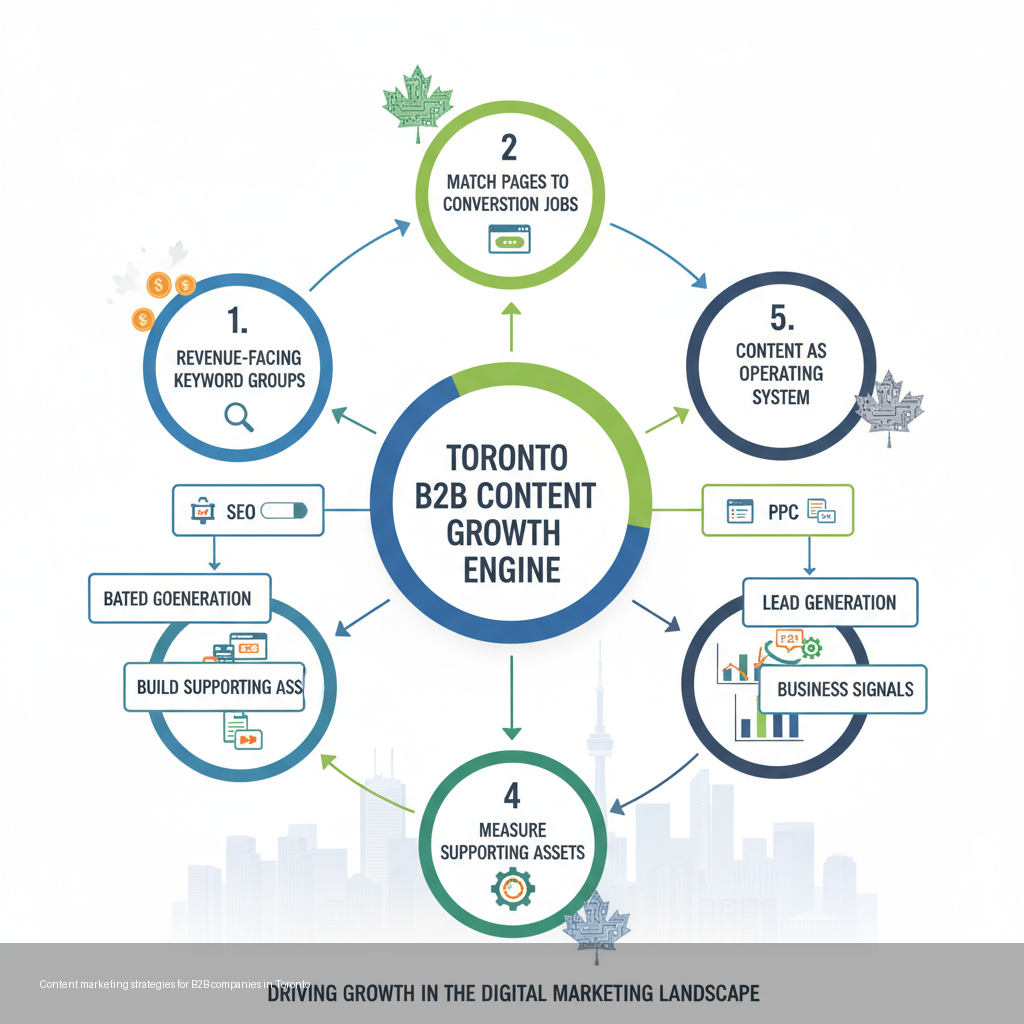
Content marketing strategies for B2B companies in Toronto
Strong content marketing strategies for B2B companies in Toronto usually do three things at once: attract qualified traffic, help buyers compare solutions, and support sales conversations after the first visit. For Toronto-area B2B firms, that means building content around real search intent, clear proof points, and conversion paths that turn research into enquiries. A blog post alone rarely does the job. The better approach is a connected system of SEO, landing pages, thought leadership, and reporting.
That matters even more in competitive categories where buyers compare multiple vendors before they ever fill out a form. A manufacturer in Etobicoke, a software firm downtown, and a professional services company in North York may all need different messaging, but they face the same pressure: produce content that earns visibility and helps revenue teams close. If your broader growth plan also includes Digital Marketing Services, content should support those channels rather than sit apart from them.
What a B2B content strategy needs to do beyond publishing articles
In a B2B setting, content is not just brand publishing. It is the structure behind demand generation, organic visibility, remarketing audiences, and sales enablement. That is why many companies searching for content marketing toronto support are really trying to solve a larger lead quality problem: traffic may exist, but it does not convert into calls, booked meetings, or sales opportunities.
A practical strategy starts with a clear map between buyer stages and content formats. Early-stage visitors may respond to educational search engine optimization content, category pages, and comparison posts. Mid-funnel prospects often need service pages, case-study style proof, and landing pages tied to lead generation agency toronto goals. Late-stage buyers want specifics: implementation process, timelines, technical depth, and confidence that tracking is set up properly. If organic visibility is a weak point, stronger SEO Services usually sit near the centre of the plan.
One common misconception is that B2B content should sound formal to feel credible. In practice, the strongest pieces are clear, specific, and built around business questions buyers already ask internally. A sales manager asks whether a page speaks to one industry or five. A marketing lead asks whether technical seo services are in place before scaling production. A founder asks whether the content can support both visibility and conversion. Those are the questions that should shape the content calendar.
Why Toronto, Ontario changes how B2B content should be planned
Competition is local, regional, and national at the same time
Toronto, Ontario creates an unusual planning challenge because many B2B companies are selling into a local market while also competing with firms across the GTA, Ontario, and Canada. A page targeting digital marketing toronto may compete against local agencies, national publishers, software platforms, and directories all at once. That makes generic content hard to win with. The page needs a sharper angle, clearer service fit, and stronger evidence of commercial relevance.
For some businesses, the local layer still matters a great deal. Buyers often search with geographic intent when they want a partner who understands regional search demand, sales cycles, and service coverage. That is why terms such as digital marketing agency toronto, marketing agency gta, and online marketing toronto continue to show up in high-intent journeys. Local relevance does not mean stuffing neighbourhood names into headings. It means addressing how firms in Toronto, Ontario actually buy, compare, and evaluate vendors.
Different business districts bring different buying patterns
Content that speaks to downtown financial and professional services buyers will not always match the needs of industrial firms near Scarborough, manufacturers moving through Vaughan and Markham, or multi-location service brands operating across Mississauga and North York. In our work, we often see stronger performance when content clusters are built around vertical pain points instead of one broad “B2B” message. That could mean separate pages for professional services, SaaS, distributors, or e-commerce support.
Toronto also has dense competition around commercial search terms. If your company wants visibility near areas like the Financial District, Liberty Village, or the broader GTA corridor, content needs tighter keyword targeting, cleaner internal linking, and better conversion logic than a basic publishing calendar can provide.
Local fit depends on clarity, speed, and proof
Toronto-area B2B buyers usually move fast once internal alignment happens. They may spend weeks researching quietly, then expect quick answers on scope, process, and reporting. That is why effective content often pairs educational pieces with practical assets such as service pages, FAQ blocks, and dedicated pages for conversion rate optimization toronto, website design toronto, and google ads management toronto. The content should shorten the gap between interest and contact, not add friction.
How the strongest B2B content strategies compare
For companies evaluating content marketing strategies for B2B companies in Toronto, the real question is not whether to publish. It is which mix of channels, asset types, and distribution tactics best fits your sales cycle, internal resources, and revenue goals in Toronto, Ontario.
Content by funnel stage
A) Top-of-funnel education: This approach builds visibility by answering broad, problem-aware searches and attracting new visitors through organic search and social distribution.
- How it works: Publish articles, explainer pages, and SEO content writing around category questions, industry pain points, and search engine optimization themes.
- Best fit: Companies with longer sales cycles that need more non-branded traffic and awareness before prospects are ready to speak with sales.
- Example: A B2B software provider creates educational content around analytics setup, tracking, and reporting before introducing platform-specific demos.
B) Mid-funnel comparison content: This approach helps buyers evaluate providers, channels, and implementation paths once they already know the category.
- How it works: Build comparison pages, service explainers, vertical landing pages, and proof-led content tied to buyer objections.
- Best fit: Firms with decent traffic but weak conversion rates, especially when visitors read but do not enquire.
- Example: A service business publishes pages comparing SEO versus paid search for lead generation and supports them with role-specific landing pages.
C) Bottom-funnel sales enablement: This approach focuses on helping late-stage prospects feel confident enough to take the next step.
- How it works: Use case studies, implementation pages, onboarding explainers, pricing-process pages without unsupported fee claims, and strong calls to action.
- Best fit: B2B companies with established demand that need better close support rather than more raw traffic.
- Example: A Toronto consultancy develops decision-stage content around scope, timelines, dashboards, and stakeholder reporting.
SEO-led, paid-led, and hybrid distribution
A) SEO-led content: Organic-first content compounds over time and often lowers dependence on paid traffic once rankings mature.
- How it works: Build keyword clusters, internal links, technical SEO foundations, and service pages that target high-intent searches.
- Best fit: B2B firms willing to invest steadily and improve visibility over several months rather than expecting instant volume.
- Example: A company targeting seo company toronto and seo services toronto builds supporting content around audits, local visibility, and conversion strategy.
B) Paid-led content: Paid distribution can test offers, messages, and landing-page conversion paths faster than organic alone.
- How it works: Send qualified traffic through paid campaigns, then use engagement and conversion data to refine content priorities.
- Best fit: Firms entering new markets, launching new services, or needing short-term lead flow while SEO builds.
- Example: A business tests ppc agency toronto style search campaigns and uses the query data to shape future blog and landing-page content.
C) Hybrid content engine: A combined approach usually gives the clearest signal on what drives both pipeline and efficiency.
- How it works: Pair SEO content with paid promotion, remarketing, and conversion tracking so winning topics get scaled across channels.
- Best fit: Growth-focused B2B firms that want both long-term search equity and near-term lead generation support.
- Example: A Toronto company uses organic content to rank and uses search ads to capture late-stage queries around service selection.
In-house, freelance, and agency execution
A) In-house team: Internal teams often know the product and buyer language best, but execution can slow down when writing, SEO, design, and analytics sit in separate silos.
- How it works: Marketing owns planning and production, sometimes with support from subject-matter experts and internal sales stakeholders.
- Best fit: Companies with established content operations, editorial leadership, and reliable access to design and development support.
- Example: A SaaS company with a full demand-gen team manages its own publishing calendar and reporting cadence.
B) Freelance support: Freelancers can add writing capacity, but coordination becomes harder when SEO, CRO, analytics, and page implementation are split across vendors.
- How it works: The company assigns briefs and approvals while freelancers draft individual assets.
- Best fit: Businesses that already have a clear strategy and only need production support for selected topics.
- Example: A manufacturer hires a writer for thought leadership but still handles technical SEO and publishing internally.
C) Agency-led program: Agency support usually works best when content is tied to broader performance goals rather than treated as a stand-alone deliverable.
- How it works: The agency connects research, writing, SEO, landing pages, analytics, and channel feedback into one operating rhythm.
- Best fit: B2B companies that need stronger execution across multiple disciplines and want reporting tied to business outcomes.
- Example: A Toronto business combines content strategy, Google Ads Management, and conversion tracking to improve both lead quality and volume.
Which strategy fits your sales process and growth goals?
A useful content strategy should match how your buyers behave, not how a template says a funnel should look. If the average deal involves multiple stakeholders, technical review, or a longer procurement cycle, your content needs depth and sequencing. A one-page summary may generate some traffic, but it will not replace comparison pages, trust content, and follow-up assets that support the actual buying process.
There is also a budget and capacity question. Some firms can maintain a publishing pace but struggle with measurement. Others have solid reporting through ga4 setup, google tag manager, and conversion tracking, yet lack content that targets the right commercial searches. Which problem is slowing growth more right now: not enough qualified traffic, or not enough qualified actions from the traffic you already have?
A simple comparison often helps. SEO-led content is more like building an asset that gains value over time. Paid campaigns are more like renting attention quickly. Most B2B companies in Toronto, Ontario need some version of both, supported by usable landing pages and cleaner reporting. That is where content connects directly with lead generation ads, search engine marketing sem, and CRO work instead of competing with them for budget.
A real B2B scenario from the Toronto market
One B2B company in the Greater Toronto Area came in with a familiar issue: decent website traffic, almost no commercial momentum. The blog attracted visits, but service pages were thin, conversion paths were weak, and reporting did not clearly separate branded traffic from high-intent non-branded traffic. Sales feedback suggested that prospects arrived informed, but not convinced.
Challenge: Traffic existed, but the wrong pages were doing most of the work, and commercial pages were not strong enough to support enquiries.
What changed: The company reorganized content into clear clusters, strengthened core service pages, added comparison-focused articles, and improved landing-page alignment with ad and search intent.
Outcome: Over the next few months, enquiry quality improved, sales conversations became more specific, and internal reporting made it easier to see which topics were influencing pipeline.
Client note: “We finally had content that answered the questions prospects were already asking our sales team.”
The lesson is straightforward. Publishing more content is rarely enough on its own. Better structure, clearer intent matching, and stronger page-level conversion design usually produce a bigger lift than volume alone.
How to build content marketing strategies for B2B companies in Toronto
Step 1: Start with revenue-facing keyword groups
Group topics by commercial relevance, not just search volume. That means separating awareness content from pages tied to service evaluation, category comparison, and purchase readiness. For B2B teams, keywords should connect to pipeline stages and real sales conversations. This step helps qualify search demand so you can focus production where buying intent is stronger.
What to focus on: Cluster terms such as digital marketing toronto, content marketing toronto, local seo gta, and google business profile optimization by audience and buying stage.
Why it helps: Cleaner clusters reduce overlap, improve internal linking, and give each page a clearer role in the funnel.
Example: A B2B services firm builds separate clusters for awareness, local lead generation, and decision-stage service pages rather than targeting every phrase on one URL.
Step 2: Match each page to a specific conversion job
Every important page should have one main job: educate, compare, qualify, or convert. Blog content can attract and warm up visitors, but commercial pages need sharper messaging, stronger structure, and clearer next actions. This step helps reduce friction so you can move visitors from research into meaningful enquiries.
What to focus on: Tie blog posts, service pages, landing pages, and paid search destinations to distinct user intents.
Why it helps: Pages perform better when the call to action matches what the visitor is ready to do.
Example: A page targeting ppc agency toronto should not read like a broad educational article; it should help a buyer compare management quality, tracking setup, and landing-page alignment.
Step 3: Build supporting assets around core services
High-value service pages need supporting content to rank and convert well. That includes FAQs, comparison pages, industry-specific pages, and articles that answer objections before a sales call. This step helps strengthen topical depth so you can support both SEO visibility and sales confidence.
What to focus on: Connect commercial pages to related topics such as local search marketing, pay per click advertising, conversion optimization, and analytics and tracking setup.
Why it helps: A stronger content network improves crawl paths, topic clarity, and buyer confidence.
Example: A company offering wordpress web design toronto or shopify web design toronto should also publish content around speed, CRO, technical SEO, and platform fit.
Step 4: Measure business signals, not vanity activity
Content reporting should show what pages influence form fills, calls, booked consultations, and qualified leads. Rankings and pageviews still matter, but they are not enough on their own. This step helps connect content to revenue outcomes so you can decide what to expand, refresh, or retire.
What to focus on: Track assisted conversions, landing-page engagement, call events, and lead quality by source and page type.
Why it helps: Better measurement reveals which themes drive business value and which ones simply attract passive traffic.
Example: A team using dashboards sees that comparison pages contribute more influenced leads than broad thought leadership, then shifts resources accordingly.
Step 5: Treat content as an operating system, not a campaign
Content performs best when it is reviewed, improved, and redistributed over time. Search behaviour changes, service priorities shift, and sales teams uncover new objections. This step helps protect momentum so you can keep improving traffic quality and conversion efficiency instead of publishing once and hoping for results.
What to focus on: Refresh ageing pages, test new offers, improve internal links, and fold sales feedback into future briefs.
Why it helps: Ongoing refinement often produces better returns than constant net-new publishing.
Example: A Toronto B2B company updates older SEO content with clearer CTA placement, better proof points, and stronger links to current service pages.
What experienced marketers usually wish B2B teams knew earlier
- Traffic quality beats traffic volume. A smaller number of relevant visits from commercial searches often produces more pipeline value than a larger number of broad informational visits.
- Content and CRO should be planned together. Even strong writing underperforms when forms, landing pages, and user paths are weak.
- Sales conversations are content research. If prospects keep asking the same questions about reporting, timelines, or implementation, those questions belong on the site.
Where agencies often underdeliver on B2B content
Many B2B firms have already tried content before they ask for outside help. The frustration is usually not that nothing was published. It is that the content was disconnected from sales intent, technical SEO, or campaign data. Pages may rank for broad phrases, but they do not support the buying journey well enough to influence leads.
Another weak spot is execution across channels. A company may invest in blogging, but the landing pages do not reflect the same message. Or paid campaigns generate useful search query insights, yet nobody feeds that information back into SEO content planning. The result is duplicated effort and unclear attribution.
Basic content program
Publishing calendar first
Weak links to service pages
Reporting focused on visits
Integrated growth program
Search intent first
SEO, PPC, landing pages, and tracking aligned
Reporting tied to calls, forms, and lead quality
That is often the real difference between content that stays busy and content that supports growth. For companies also investing in social media marketing toronto, linkedin marketing, facebook ads, or instagram ads, the content framework should make each channel more effective, not compete with it.
How to choose a B2B content partner in Toronto
The right partner should be able to explain how content connects to search intent, paid campaigns, landing pages, and reporting. If those pieces live in separate conversations, performance usually stalls. For commercial content, the most useful question is simple: how will this plan improve lead quality or close-rate support, not just publishing output?
For businesses in Toronto, Ontario, it also helps to choose a team that understands local competition and multi-area targeting. A company serving Toronto alone may need one content architecture. A business selling across the GTA and Ontario may need a different structure with service-area pages, industry pages, and stronger internal linking between them.
Before choosing an agency or outside team, ask:
- Can they connect content with SEO, PPC, and CRO? If not, gaps usually appear between visibility and conversion.
- Can they explain measurement clearly? You should know how leads, calls, forms, and assisted conversions will be tracked.
- Can they produce and implement? Strategy is useful, but execution across pages, tracking, and site structure is where results are shaped.
- Do they understand local and service-area search? That matters for terms such as seo company toronto, local seo gta, and location-led service content.
What shapes ROI in B2B digital campaigns
ROI is usually influenced less by one channel choice and more by alignment across targeting, messaging, landing pages, and tracking. A business may spend efficiently in paid search but lose performance on weak destination pages. Another may build strong organic visibility but miss conversions because forms, offers, or proof points are not strong enough. Content sits in the middle of both problems.
Three factors usually have outsized impact:
- Intent alignment: Pages should match what the searcher is actually trying to solve, especially on commercial terms.
- Conversion design: Strong copy, clear layouts, and useful proof reduce drop-off once visitors arrive.
- Measurement quality: Without reliable attribution, it is hard to know whether SEO, PPC, or specific content assets are influencing pipeline.
That is why many growth-focused teams combine content with landing-page testing, search campaign data, and better dashboard reporting rather than treating each channel as a separate project.
SEO and PPC each play a different role
SEO and PPC are often framed as competing budget lines, but for most B2B companies they solve different timing problems. SEO supports long-term visibility, builds trust through organic discovery, and helps own more of the research journey. PPC can capture demand faster, validate messaging, and reveal which commercial queries deserve stronger organic content investment.
A simple way to think about it: SEO builds durable reach; PPC tests and accelerates reach. If your company already has some traction in organic search, paid search can fill timing gaps and support high-intent commercial terms. If your business is still building authority, PPC can create short-term learning while SEO compounds in the background.
- Use SEO when you want compounding visibility, stronger non-branded reach, and content that supports broader search journeys.
- Use PPC when you need faster testing, campaign control, and better visibility into late-stage query behaviour.
- Use both when you want long-term search equity with near-term lead generation support.
How Toronto businesses can compete online without publishing endlessly
Toronto companies do not need the largest content library to compete. They need clearer positioning, stronger topic clustering, and better page quality than firms producing generic material at scale. In competitive local search, a well-built content system often outperforms a high-volume calendar filled with broad topics and weak conversion paths.
That usually means choosing narrower battles. One company may win by becoming more useful around website development gta and technical implementation. Another may gain ground through better local service pages, stronger thought leadership, and tighter pages for google business profile optimization. Another may compete through clear industry pages and smarter retargeting support tied to content engagement.
For B2B companies across Toronto, Ontario, the practical edge often comes from focus: better pages, better measurement, and better coordination across organic and paid channels.
FAQs About content marketing strategies for b2b companies in toronto
It depends on your starting point. If the site already has technical foundations, clear service pages, and tracking in place, early gains can show up within a few months. For newer or under-structured sites, SEO-led content usually takes longer because rankings, internal links, and conversion paths all need time to improve together.
Not every company needs both right away, but many businesses in Toronto, Ontario benefit from the combination. SEO helps build long-term visibility and authority, while PPC can capture immediate intent and test commercial messaging faster. The right mix depends on sales urgency, budget, and how competitive the category is.
Service pages, comparison pages, case studies, industry pages, and well-structured blog content often perform well because they align with different stages of research. The strongest mix depends on how your buyers evaluate vendors and how much detail they need before speaking with sales.
The clearest signals are qualified form fills, calls, booked meetings, assisted conversions, and stronger sales conversations. In Toronto, Ontario, it also helps to separate branded from non-branded traffic so you can see whether content is expanding reach or only capturing people who already know your brand.
Start with intent matching and conversion paths. Check whether the pages attracting visits are the same pages that should be driving leads. Then review internal links, offers, form friction, proof content, and landing-page structure. Very often, the issue is not traffic alone; it is the gap between interest and action.
Build trust into your content strategy, not just your pitch
For B2B firms, content works best when it is tied to measurable goals, implemented across the right pages, and reviewed through reliable reporting. Zigma Internet Marketing supports Toronto-area businesses with SEO, PPC, content, CRO, web development, and analytics in one connected process. That includes Google Partner-certified expertise, clear KPI-focused reporting, and practical implementation support across tracking, landing pages, and search visibility. If you want a plan that connects content to leads rather than just traffic, you can reach the team at (647) 556-6071 or info@zigma.ca, or 📩 Request a strategy + pricing.